


ATLAS OF CONFLICT REDUCTION
A Montana Field-Guide To Sharing Ranching Landscapes with Wildlife
Dr. Hannah F. Jaicks

This book takes readers on a journey through western Montana to showcase ranchers and partner groups who are pioneering strategies for reducing conflicts with wildlife and why. Together, psychological theory interwoven with personal stories from 21st century conservation heroes provide a roadmap on how healthy, shared ranching landscapes can be achieved.
-
The book is a firsthand account of Dr. Hannah Jaicks’ journey through western Montana’s ranching landscapes to showcase the stories of ranchers and affiliated groups who are pioneering strategies for reducing conflicts with wildlife, while also stewarding the landscape. Americans depend on these people who live by working on the land. Ranchers have the power to shape the future of our lands, waterways, and wildlife communities, but enduring perceptions frame ranching as a unilaterally destructive force to the environment. Perception is slippery ground to base an argument on, however, and reality is far more complicated.
Often seen as antithetical to one another, American ranchers and wildlife have long been entangled with another. The Atlas of Conflict Reduction is about producers and partner organizations who are forging new paths in conservation and addressing these seemingly intractable entanglements to sustain working ranch operations alongside healthy wildlife populations. It elevates the voices of these people striving daily to achieve wild and working landscapes in the West and serves as a model for how others can begin to do the same. Illustrations by Katie Shepherd Christiansen (Coyote Art & Ecology) of wildlife and conflict-reduction tools accompany the text, helping to underscore the vivid realities of shared landscapes and how they are achieved.
This Future West project could not have happened without the generosity of AMB West Conservation Fund of the Arthur M. Blank Family Foundation, Cinnabar Foundation, Kendeda Fund, Harder Foundation, Wilburforce Foundation, Natural Resources Defense Council, American Prairie Foundation and several individual donors.
-
The author takes readers on a journey up western Montana to a different valley in each chapter and showcases the place-based stories of everyday conservation heroes who practice regenerative ranching, provide consciously-raised agricultural products, advance strategies for collaborative conservation and protect vital habitat for endemic wildlife that would otherwise be developed and subdivided beyond repair. Each chapter introduces the reader to a different community and couples their stories with broader themes and ideas from the disciplines like environmental psychology, human geography, and environmental history to better illustrate the issues ranchers face in attempting to maintain their livelihood among wildlife populations but also the opportunities ranchers take advantage of to overcome them and why. In sharing first-hand accounts from ranchers and the organizational leaders who work with them, I weave together the particulars of local geographies with rich human stories to inform readers about progressive ways to make the world we share—with people and animals—a better place to live.
-
There is no doubt the history of ranching is laden with problematic examples, and public and private rangelands are not universally in good condition today. This book aims to capture the increasing recognition that strong ranching practices coincide with good land and wildlife stewardship measures, but ranchers need help. If we want to see more of this remarkable work happening, environmentalists and concerned citizens need to step up and ensure these practices are not only possible but also become the norm. Everyone must be willing to come to the table and navigate discussions about how to work together more effectively and collaboratively. This book is a roadmap for how people can begin to do so.

The Journey of Conflict Reduction

CHAPTER I - OVERVIEW
“Sharing landscapes with wildlife comes down to the matter of having as many tools in the conflict-reduction toolkit as possible and understanding how to make the use of those tools achievable and desirable for ranchers. ”
-
Chapter one outlines the social and environmental history of western Montana and introduces the ranching family who helped Future West Project Director Hannah Jaicks launch her project. Western Montana’s landscape and its inhabitants reflect a long and varied history of social meaning and environmental decision-making regarding the flora, fauna, and people who call it home. This history explains how western Montana came to be in its current physical and social landscape, allowing Dr. Jaicks to explain the resultant conflicts and provide an overview of the conflict-reduction tools.

The Centennial Valley

CHAPTER 2 - CENTENNIAL VALLEY
“We have altered our environment to a degree now. There is no going back, which is tough, but we can have a remarkably diverse place to live with lots of animals and plants. We need to have people who live there to take care of it and that’s what I do, so you can’t go vilifying a profession like ranching. And not even just the profession, you can’t go vilifying the culture. My folks have raised cows since they got kicked out of Germany and Ireland in the early 1900s. The history and tradition are important. We try to do the best that we can on this land, we really do.”
-
Chapter Two illustrates how the economy and way of life for ranchers in western Montana is embedded in a much larger story about the places people hold dear. This chapter focuses on concepts of place identity and place attachment by traveling along with the Martinell family, Mike Raffety, and other local ranchers on their daily acts of living, working, and playing in the Centennial Valley. It is easy and common to put people in boxes and avoid getting to know them. By illustrating the place identity and attachments to the landscape among ranchers, readers will begin to identify commonalities with themselves and see the irony of ranchers’ and their environmental critics’ shared desire to protect valued “places” like the Centennial Valley. Introducing these concepts also informs ranchers’ experiences, behaviors, and attitudes about others, which is necessary for understanding the psychology of environmental decision-making contemplated at length in chapter three.

The Big Hole Valley

CHAPTER 3 - BIG HOLE VALLEY
“You can’t let frustration get you down. Take the wolf reintroduction. Yeah, we weren’t happy about the wolves, but we want to live here. We want to stay here. So we’ve figured it out. I’ll say exactly what I say to you in public meetings with people sitting there who totally disagree with me. I don’t get upset when I speak. I just state the way I see the world, and how I think we can do better. I don’t always win people over with my approach, but once in a while I get someone who will hear me. I’ve since made a lot of friends in the environmental community I never thought I would have when I was younger. I was pretty harsh the other way initially. I still don’t agree with them all the time, but part of the time I do, and we can work together on tough issues. It’s an ever-changing thing I keep working at.”
-
As readers learn about in Chapter One, a suite of conflict-prevention tools exist to manage the physical, ecological, and economic threats livestock-wildlife conflicts can present. However, what is often missing from accounts about these tools are the contextual factors shaping people’s willingness to use them. Chapter three integrates research on the psychology of decision-making with success stories from the Big Hole Watershed Committee (BHWC) and local ranching community of the Big Hole Valley to help readers understand the critical components essential for implementing any type of effective conservation strategy. Dean Peterson, the Kalsta family, and Jim Hagenbarth all add to these ideas by describing their personal stories as ranchers and their reasons for participating in local collaborative conservation efforts with groups like BHWC, People and Carnivores, and Wildlife Services. These essays capture the types of considerations typically ignored when attempting to undertake environmental initiatives but are absolutely essential if we want to accomplish any type of collective victory for the land and living beings.

The Ruby Valley
CHAPTER 4 - RUBY VALLEY
“Wool is a pretty unique product. A lot of ag operations don’t have the pleasure of having a product like wool. Meat is more perishable. It’s a lot harder to build a marketing company around something with a shelf-life. Wool is nicer to store and has a lot of value to it too. Our goal is to show we can take a couple hundred thousand dollars’ worth of wool on this ranch every year and convert that to a couple million dollars in sales. We want to show how much value agricultural products have when you take them past the farm gate. People talk a lot about what spurs the economy and how to revitalize rural America and all that stuff. [My son] Evan and I both have degrees in Econ, so we understand that concern. It’s hard for us to not think that adding wealth into a system is good for a local economy and our state and our country and everybody that’s involved in the property—the people shearing our sheep, the people selling us insurance, the people selling us supplies and trucking our products. Then, you take it to Duckworth, and they’re combing, spinning, dyeing, weaving, cutting and sewing it. I bet if we added up the people who touch our product, it would be in the hundreds.”
-
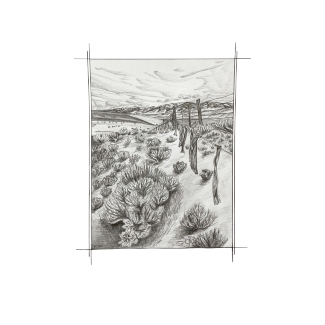
To further unravel pre-existing ideas about environmentalism and conservation, Dr. Jaicks takes readers to the Ruby Valley in chapter four and uncovers the “culture of nature” surrounding humankind’s relationship to the environment. The idea we need to “get back to nature” has long been echoed in various media outlets and conservation publications. What is absent from these accounts is a harsh reality: there is no such thing as a “pristine” nature we can get back to at this point. By interacting with the natural world, we inherently alter it. Environmental ideals purporting an untampered nature put humans in an oppositional relationship with the natural world and prevent any kind of practical problem-solving opportunity to arise where the needs of humans and nature can be mediated. Through discussions with family members from the Helle sheep ranch and its affiliated clothing brand, Duckworth, we learn about efforts to keep the ranch in the family through the creation of value-added enterprises, and we hear from others like Heather Puckett at MT Cross Farms and Dave Delisi at the Ruby Habitat Foundation who have sought out ways to do the same, while also stewarding the land and wildlife. These stories upend the fatalistic narratives of anti-ranching advocates and challenge readers to rethink their conservation ideals about nature so we stop treating it as something separate from ourselves and start viewing it as something we need to explore in relation to our daily lives, business practices, recreation habits, and consumer choices.

The Gallatin Valley

CHAPTER 5 - GALLATIN VALLEY
“If any animal can handle the hopes and fears of humankind, it’s the wolf. But doing that makes living here and everything about our changing world that much harder because they’re not as bad as people feared they’d be, and they’re not as good as people hoped they’d be either. They’re just wolves. You know?”
-
Chapter five builds upon Dr. Jaicks’ effort to make visible our unconscious, preconceived notions about the natural world by exploring the myths and mythologies surrounding wildlife and livestock. Through an introduction to the ways in which animals are ‘beasts of burden,’ she helps readers comprehend the underlying reasons for divisive reactions to wildlife and livestock. Becky Weed, a Predator Friendly® Certified Rancher in Gallatin Valley, Montana, describes her decision to be a part of this certification label and why the idea of being predator-friendly is so controversial for most producers. Framing her stories is a discussion about the rich and varied histories, sociocultural dynamics, and decision-making processes underpinning our relationships to wild and domestic animals.

Tom Miner Basin
CHAPTER 6 - TOM MINER BASIN
“It’s not just about saving or not killing predators. Riding and the way that humans engage livestock on the landscape is about proactive ranch management. We don’t do it for the sake of saving or incriminating anything or anyone. For us, it’s about building the most resilient operation, which includes incorporating and honoring life—and not just when it’s convenient to. Conflict mitigation shouldn’t be framed as just a means to save wildlife, it’s more empowering than that and should be seen as a way to open the door to resiliency… It’s a way of interacting with cattle where one can refine the way cattle behave so that they’re in relationship with the predators and the land in a self-sustaining way, rather than a destructive way.”
-
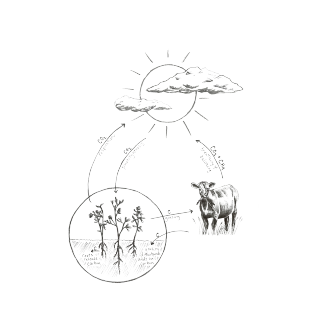
In chapter six, we head into the Tom Miner Basin of Paradise Valley, where Dr. Jaicks shares the thoughtful stories and efforts the Anderson family is undertaking to uphold a more holistic, regenerative approach to ranching and managing their landscape. Regenerative agriculture has long been seen as a contradiction. However, as Malou Anderson and her family make evident, there is a growing community of ranchers who see managing the land through ranching as an opportunity to not only restore it but enhance it for the betterment of everyone else. This chapter introduces readers to groundbreaking research on the science of soil health and regenerative agriculture. From this discussion, readers will learn how regenerative ranching has the potential to restore the landscape in a way that helps address humanity’s greatest threats: climate change, biodiversity loss, community dissolution, human malnutrition, and desertification. Reiterating the idea that we cannot afford to lose the family ranch, the story of the Anderson family helps readers see the unparalleled opportunities existing when we support them.

The Blackfoot Valley
CHAPTER 7 - BLACKFOOT VALLEY
“The coolest thing I’ve learned in managing this place is I don’t have to know it all. I just have to be brave enough to pick up the phone to call someone else who might know the answer. I like to say we have a rolodex of resource managers. If you’re tough and brave enough to ask for help, you won’t have to worry as much anymore. I sleep well at night. I used to go, ‘Oh God. I don’t know what I’m going to do!’ Now I call someone up and go, ‘Whatever I’m doing isn’t working out. Our rotation isn’t working because it’s either too hot, too dry or too wet. What should we do?’ All it takes is somebody to ask, ‘What do you think about trying this?’ I’m part of a lot of groups—Partners for Conservation, Intermountain West Joint Venture. Those groups are great because they allow people to learn from one another across the country, but what’s unique about the Blackfoot Challenge is the process. That’s the hardest part of conservation in my mind, having a process, because it takes time. That’s what drives people nuts, but that’s also what makes us different.”
-
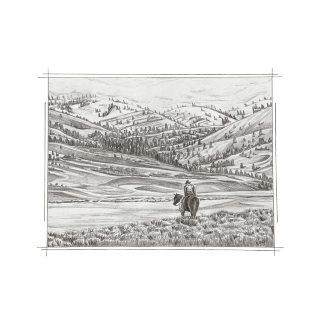
Chapter seven ties these ideas all together by capturing the stories of the ranchers, community members, agency scientists, and NGO staff who are a part of the Blackfoot Challenge. For anyone attempting to study how to achieve a successful conservation effort, it will not take them very long before they come upon the Challenge in their research. It is not coincidence or luck contributing to this decades-old community organization’s success. As Jim, Denny, David, Ben, and other ranchers will tell you, it is the Challenge’s approach to the process of building trust and relationships at the heart of this organization’s endurance and accomplishments. This approach is emblematic of the Challenge’s commitment to bringing people together to realize common goals, shared values, and a collective vision for how they want their special place to endure into the future. Although this arrangement of individual chapters is intended to speak to each of the aforementioned themes in order, the collection of stories adds up to something larger: the assertion of a different paradigm to the science and politics of managing shared landscapes among humans and wildlife.

“Dr. Jaicks is at her strongest when weaving diaglogue from her extensive collection of interviews in Montana’s ranching community together with surveys of ecology, food systems and climate change literatures. Her approached offers a compelling glimpse into the lives, concerns, and values of ranchers - a population that many, especially outside of the Rocky Mountain West - may have very limited access to. And just as importantly, her analysis gives readers a clear picture of how those lives, conerns and values can help chart a path toward human-wildlife coexistence.”
The Book


This book came about while working at Future West, thank you to Dennis Glick for supporting my vision.